WINGS Tour: Ecuador: East Andes to the Amazon
February 10 - 24, 2026
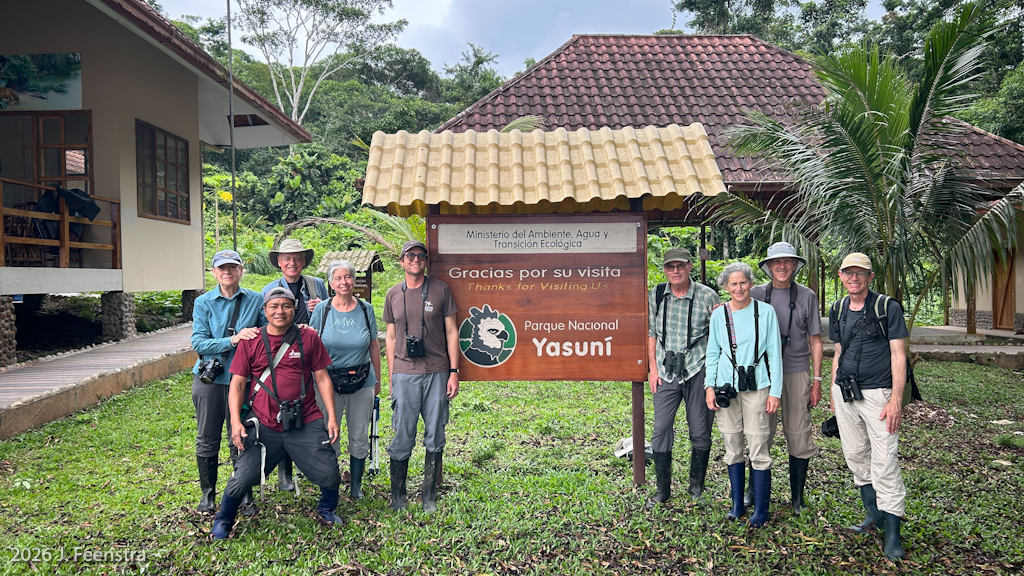
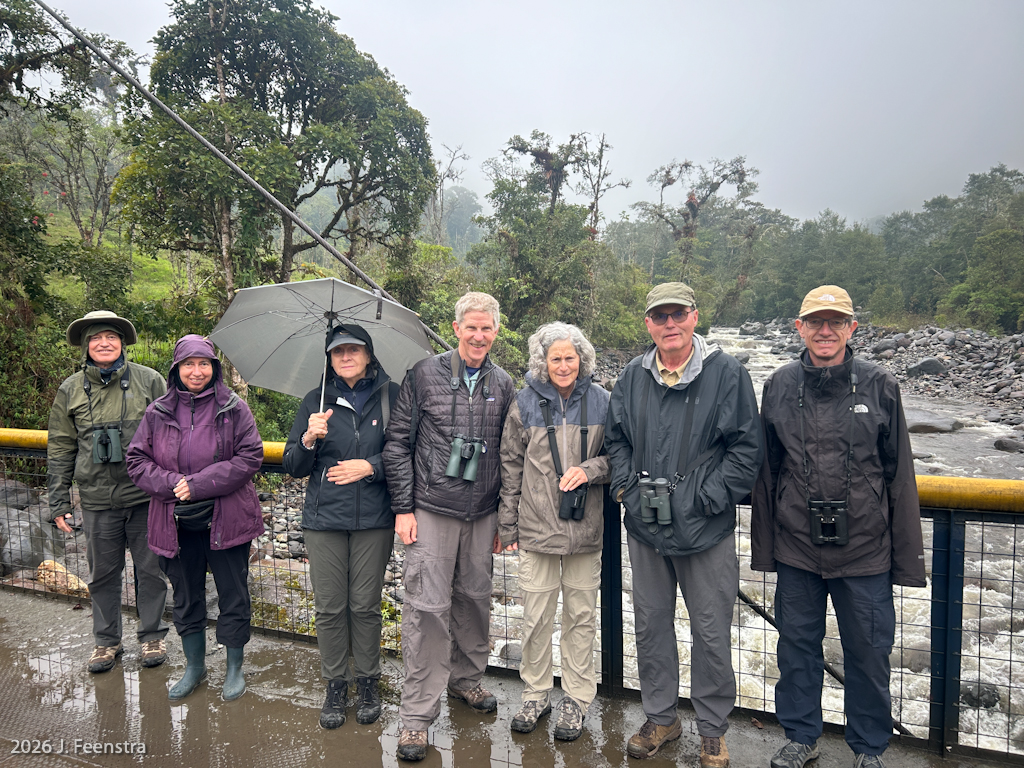
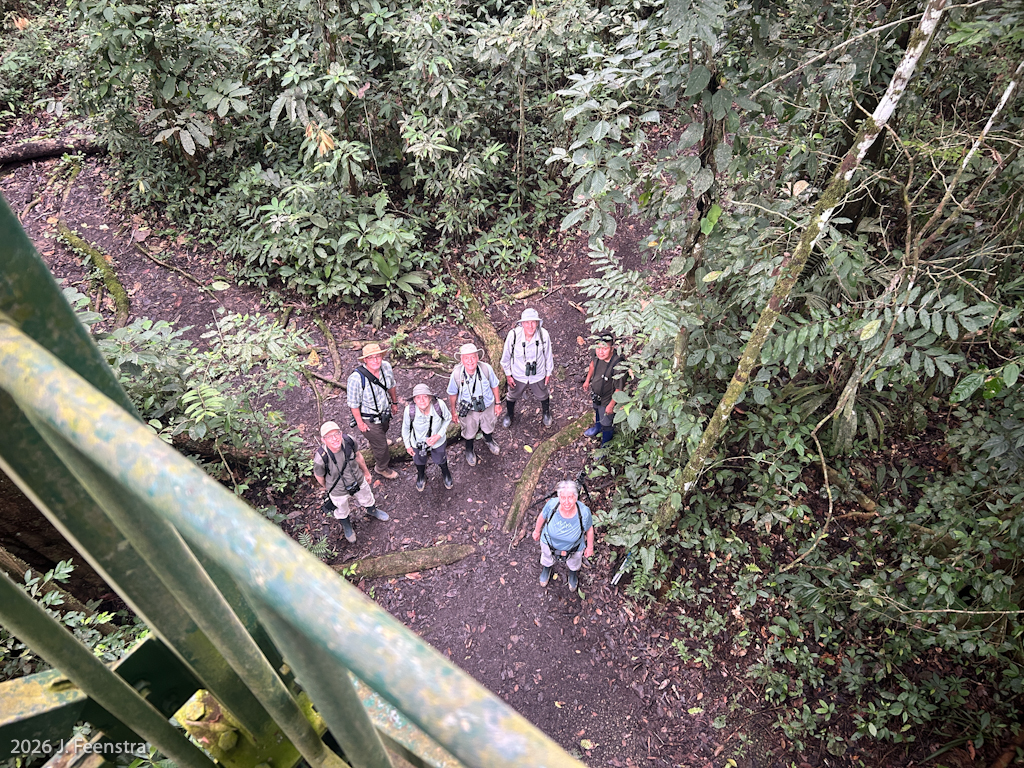
The crew: Corinne, Dennis, Eric, Johannes, Laura, Sharon, Steven, Jon (bird guy), Edwin (el chofer), Carlos (native jungle guy)
The tour of eastern Ecuador was an epic ride from the high Andes to the lowland Amazon rainforest. In thirteen days of birding we covered 4000m of elevation change and saw well over 500 species of birds. The treeless paramo highlands got us impossibly huge Andean Condors. The cloud forests brought us swarms of hummingbirds (we ended up with nearly 50 species) including some like Gould’s Jewelfront, Sword-billed Hummingbird, and Peruvian Racket-tail and dazzling tanagers like Orange-eared, Saffron-crowned, and Beryl-spangled. And, the lowlands gave us spectacular diversity and some fabulous highlights like Lined Forest-Falcon, Wire-tailed Manakin, five species of macaw, Collared Puffbird, Long-billed Woodcreeper, and American Pygmy Kingfisher. Mammals were well represented, as well, with Andean fox in the paramo and Amazonian River Dolphin down in the Rio Napo. All in all, the great swoop paid off with amazing birds and wildlife every day beginning to end.
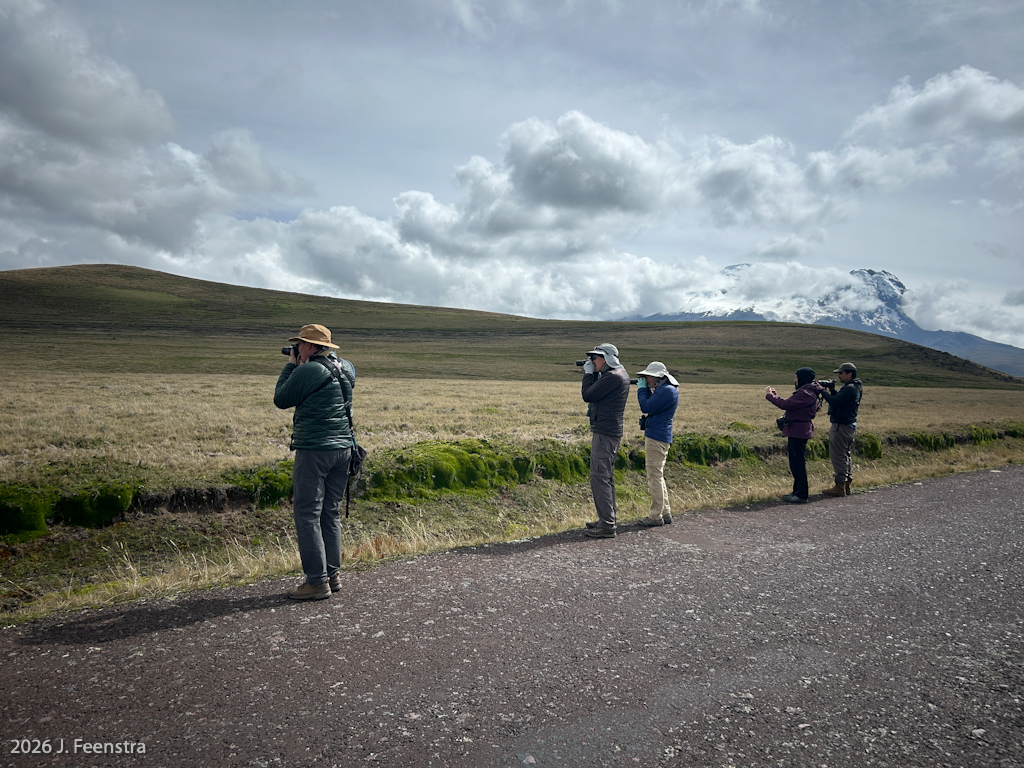
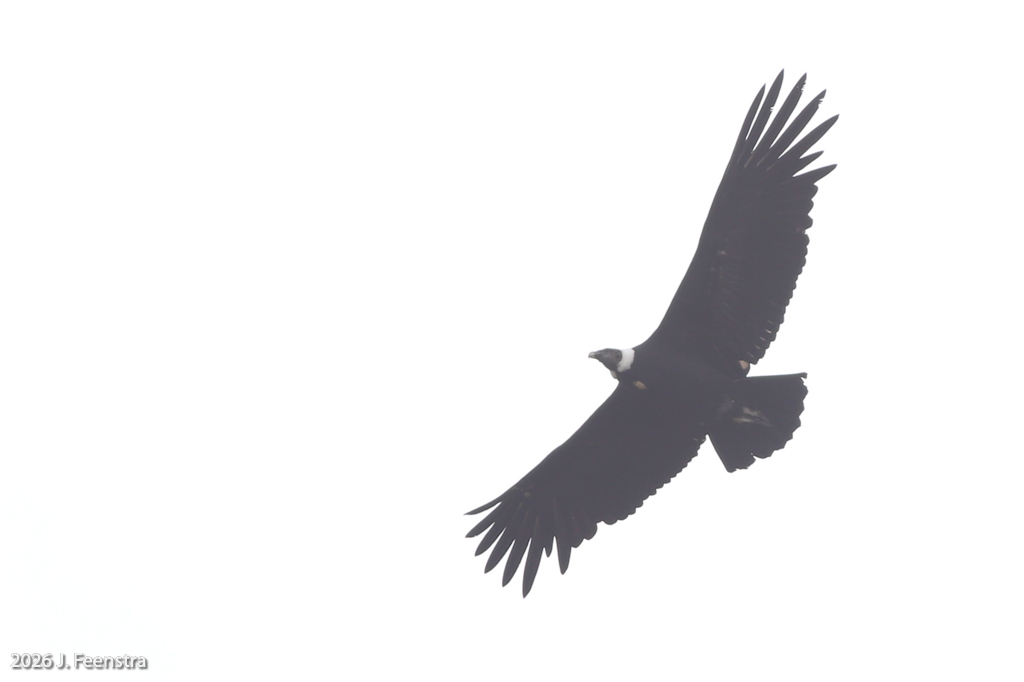
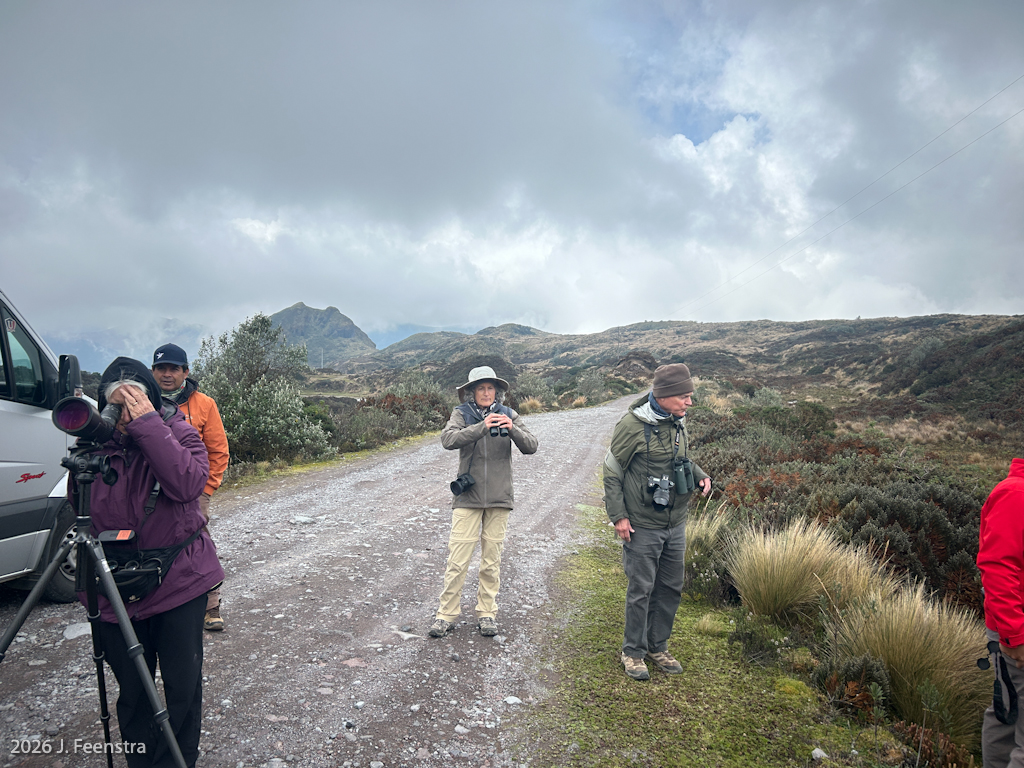
We kicked off the tour in the high country of Antisana National Park at the foot of the glaciated Antisana Volcano. These wide open spaces were quite different than the forests we visited for most of the trip, and so were the birds. We ended up with five Andean Condors for the morning, some far, but a couple soaring quite close overhead. Their enormity is not be underestimated. We also saw a few Tawny Antpittas, Ecuadorian Hillstar, Andean Ibis, Silvery Grebes out on the lake, and a couple of Black-winged Ground-Doves that we spotted while driving and landed cooperatively on a branch next to the van. We also did well for mammals and enjoyed a sighting of a culpeo, the Andean fox. After our lunch, during which another condor flew by and Giant Hummingbirds buzzed by the windows, we drove around and over the pass to land at Guango Lodge for the night. Since it was still only late afternoon, we spent a little time birding around and quickly found a prominently perched Gray-breasted Mountain Toucan. We finished the day watching the hummingbird feeders and listening to the antics of Turquoise Jays.

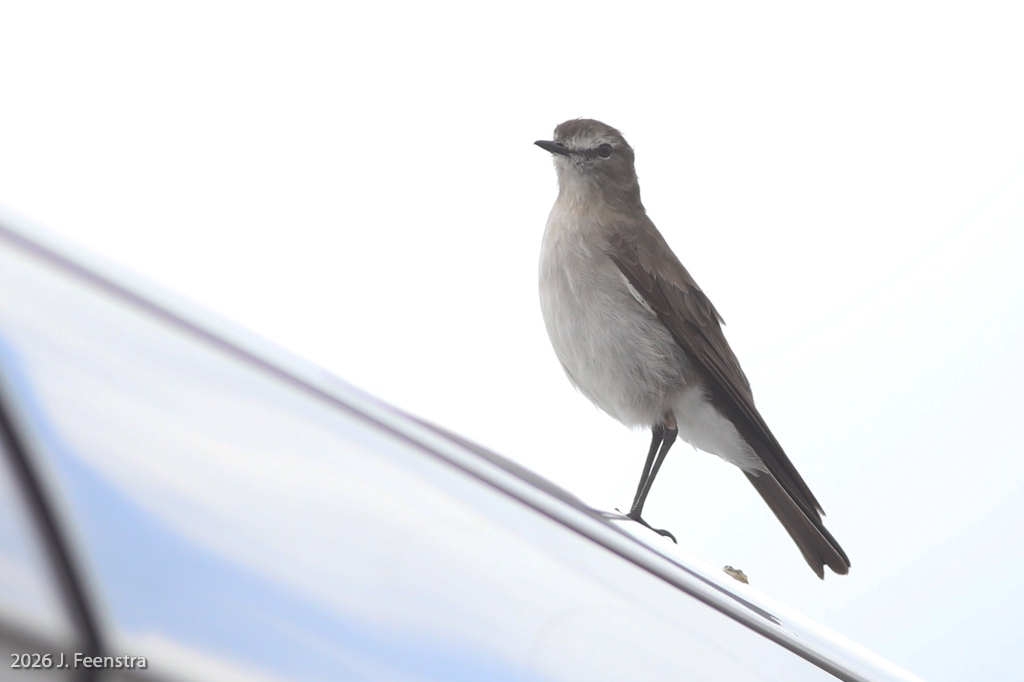
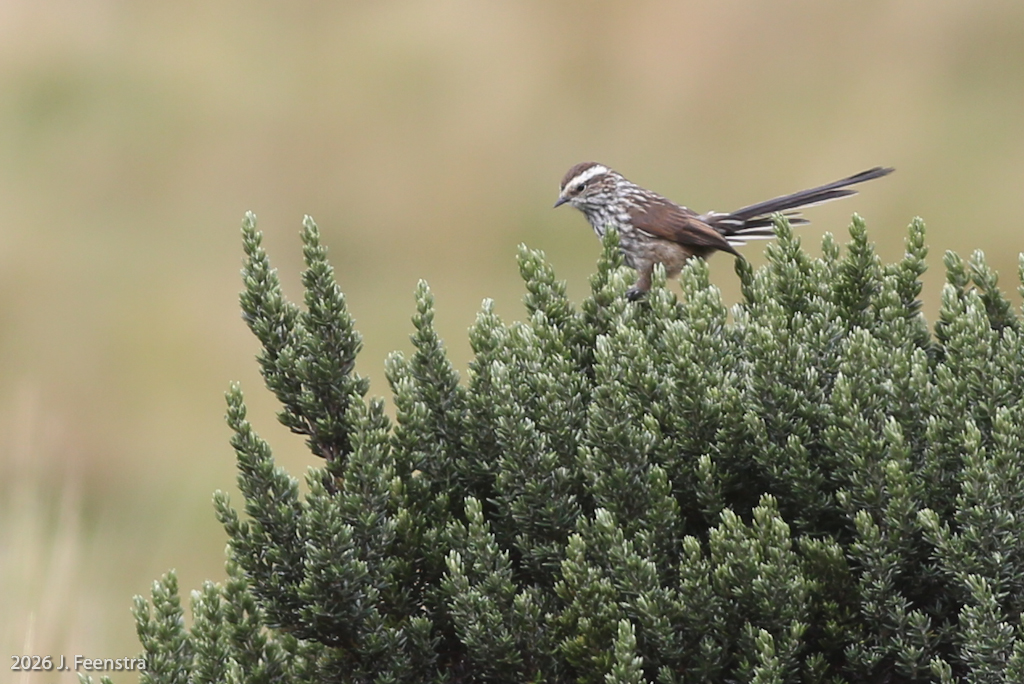

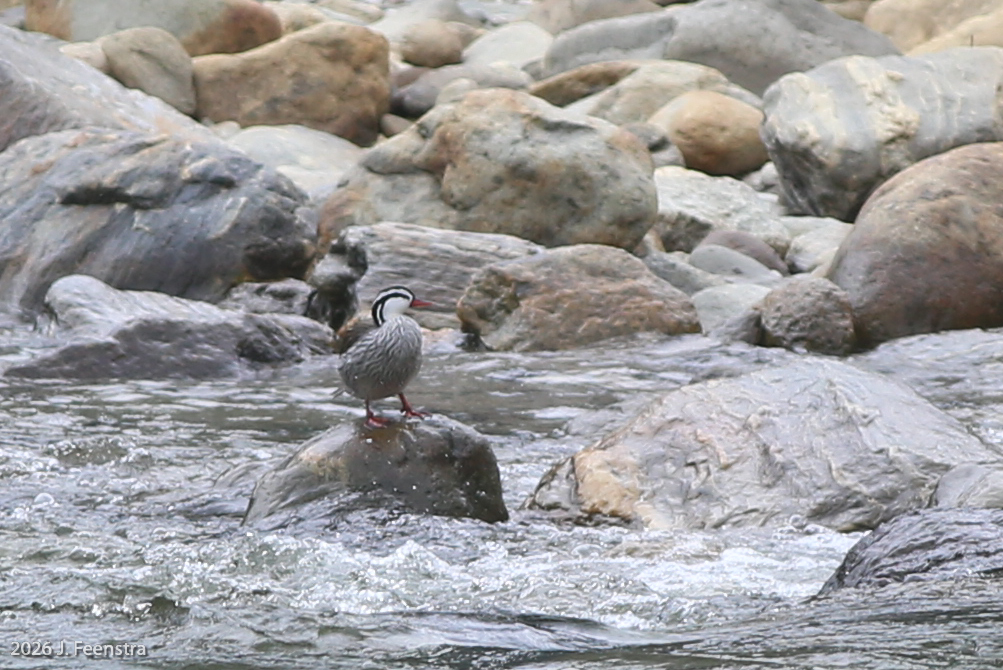
If we hadn’t had enough of chill temperatures and thin air, we completed our fix today with another foray above tree line. But, before that, we began around the lodge where we saw some Rufous-breasted Flycatchers, Masked Trogons, Blue-and-black Tanagers, Blue-backed Conebills, and a pair of Torrent Ducks. Way up in the heights it wasn’t super birdy (there aren’t that many birds), but we enjoyed a surprisingly colorful flycatcher, a Red-rumped Bush Tyrant, perched on an electrical line. We also found Viridian Metaltail, Great Sapphirewing, and a frustrating tanager flock. Our descent took us through a gorge with huge cliffs and beautiful waterfalls, and we ended at Cabanas San Isidro watching Beryl-spangled Tanagers and a Golden-bellied Flycatcher and a Smoke-colored Pewee race toward the same insect. It didn’t end there, though. Dinner was interrupted when the resident Black-banded Owls began hunting moths off the back deck and we all had to rush out to watch them.
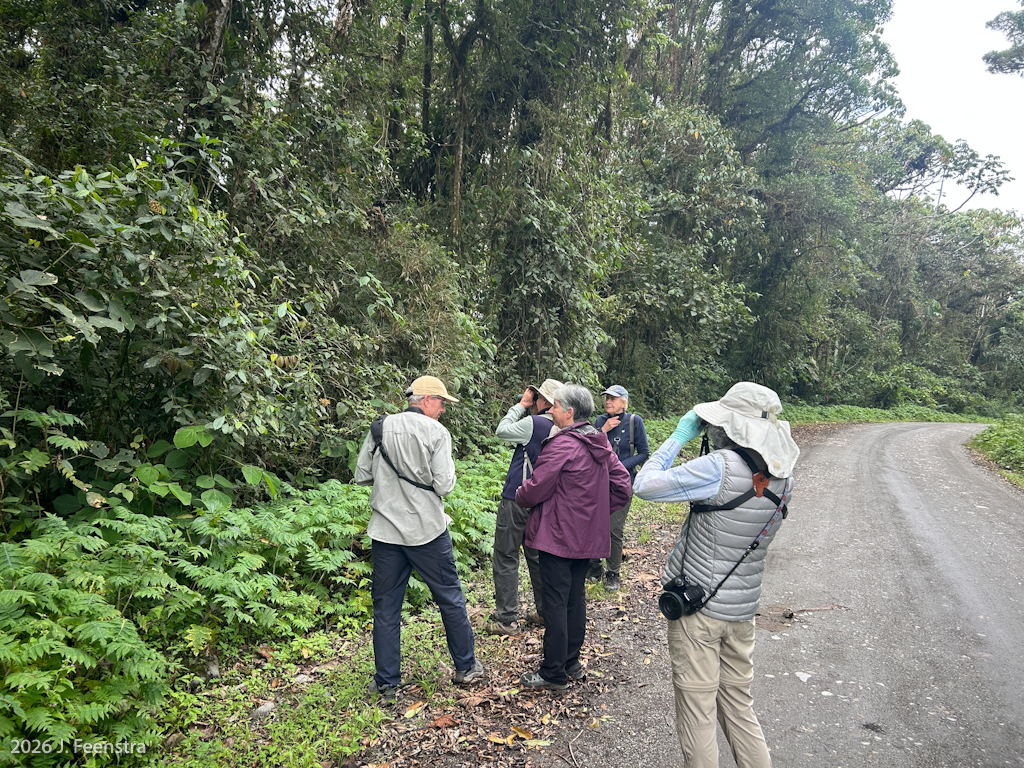
Rolling out of bed to breakfast and then into birding is the way it should always be. From the back deck with coffee in hand we watched birds come to the thick mat of moths that had been attracted by the lights left on. There were big things like Russet-backed Oropendolas, Scarlet-rumped Caciques, and Green Jays, and little things like Canada Warbler, Black-eared Hemispingus, and Marble-faced Bristle-Tyrant. We then made a short walk into the forest to see a White-bellied Antpitta. With some light rain, we left the lodge and drove up the access road into some slightly higher elevation forest patches and connected with a pair of Powerful Woodpeckers. Conveniently, the rain worsened about when it was time to head back to the lodge for lunch, then promptly cleared up. The afternoon was perfect and the birding was top notch. We began at some hummingbird feeders that had Gorgeted Woodstar, Green-backed Hillstar, and even a Geoffrey’s Daggerbill. We then walked a stretch of road nearby and found a flock that had some specialties like Golden-eared and Orange-eared Tanagers in their midst. We also encountered our first white-winged, Amazonian Blue-gray Tanagers, less familiar than their plainer brethren across the mountains.


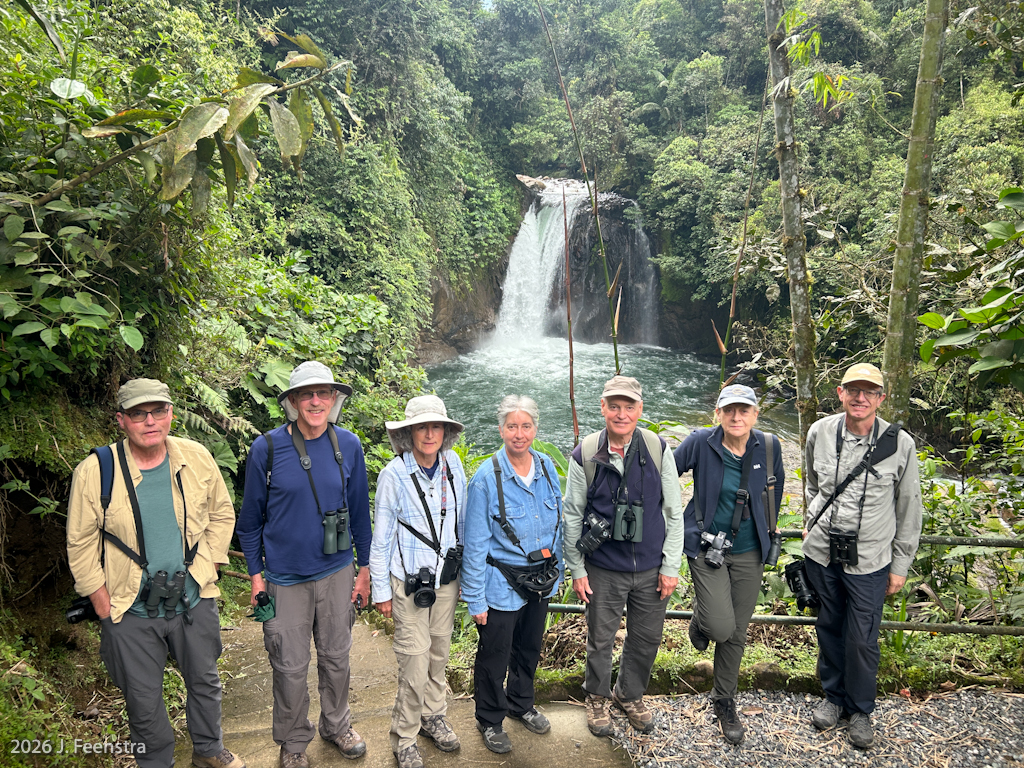
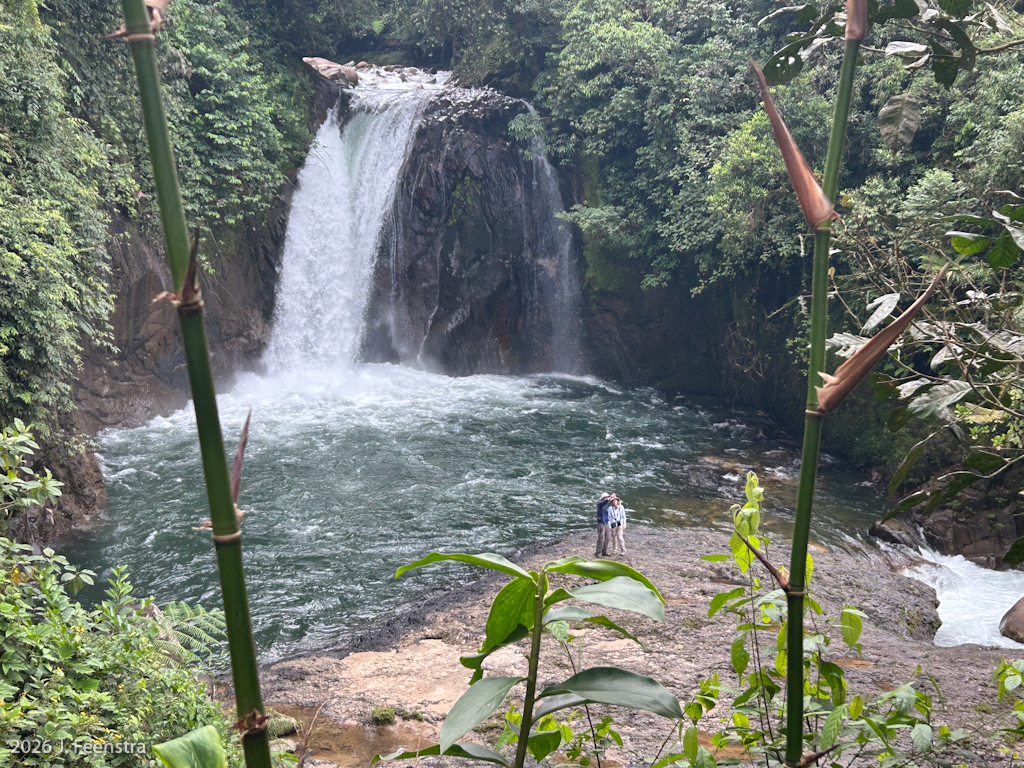
The next day brought another day of descent. We began at dawn on the nearby Guacamayos ridge and had a surprisingly clear morning that helped us with looks at Smoky Bush-Tyrant, Grass-green Tanager, and Rufous Wren. We then returned to Cabanas San Isidro and wandered around there for a couple of hours and heard some frustrating tapaculos, but also got to see not-too-bright Sulphur-bellied Tyrannulet and quite bright Rufous-crowned Tody-Flycatchers. Leaving there we dropped in elevation quite a bit and made a few important stops on our way to Wildsumaco to find some local low foothill specialties. We first popped into a quarry for Cliff Flycatcher. Then, picnic lunch. Very important. Then, we stopped at a place that had a couple of roosting Band-bellied Owls and some new tanagers like Masked and Yellow-bellied. We even saw a Yellow-browed Tody-Flycatcher on a treetop. We rolled into Wildsumaco in the late afternoon with a little drizzle and spent the rest of the time before the fog rolled in enjoying the hummingbird show with some great ones like Napo Sabrewing, Black-throated Brilliant, and Gould’s Jewelfront.
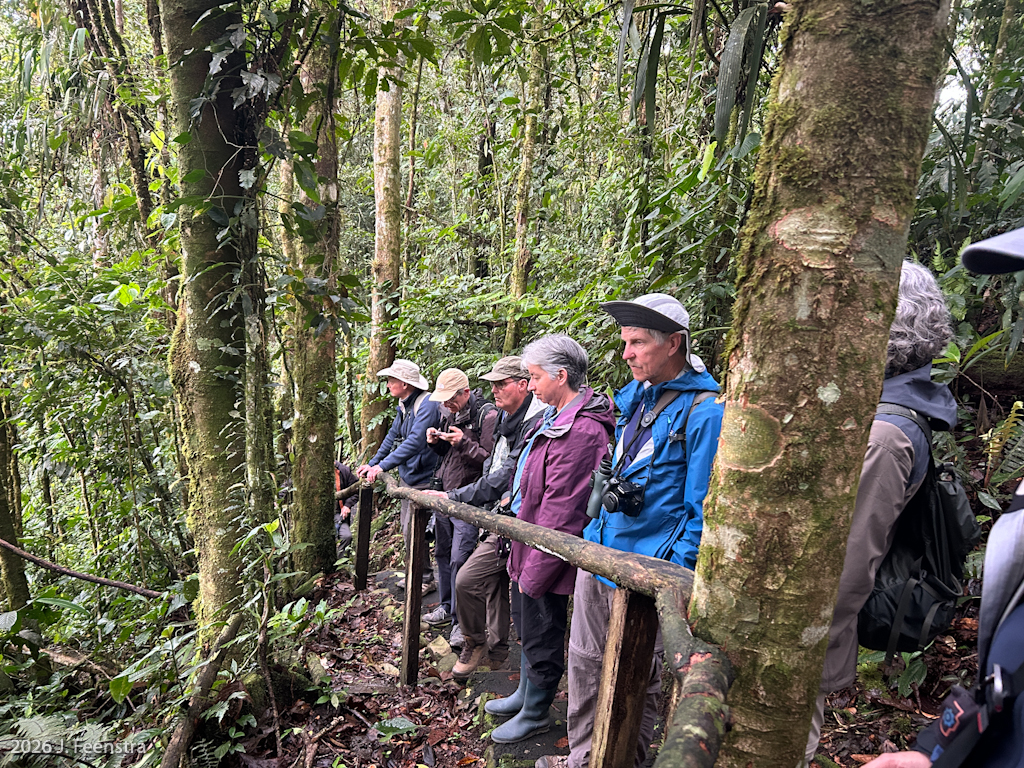
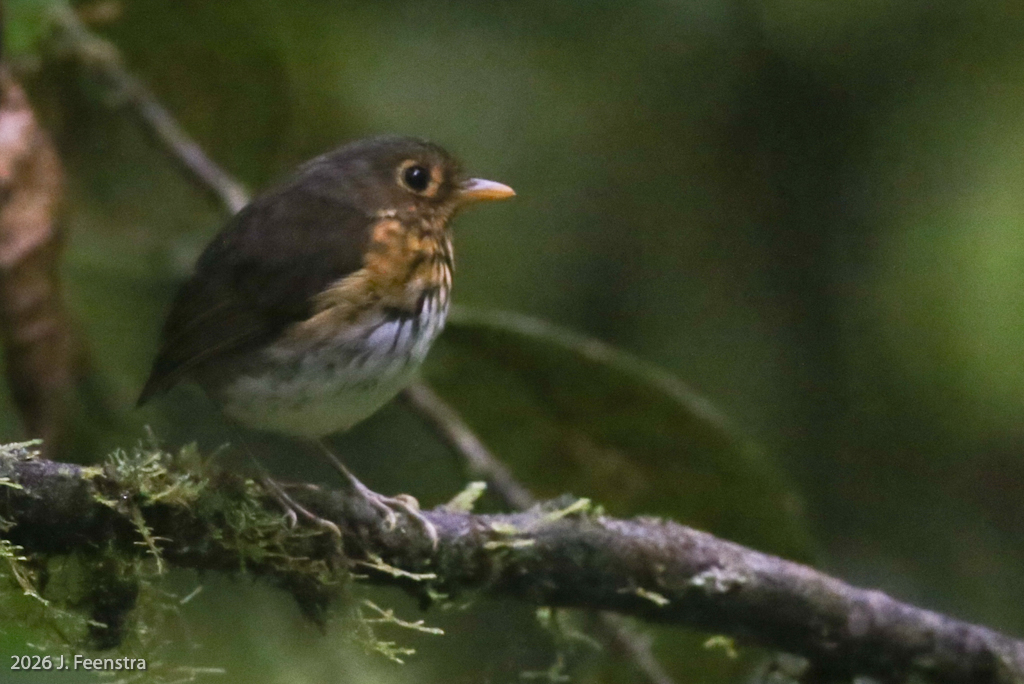

Wildsumaco sits at something of a magical nexus between subtropical cloud forest and lowland rainforest. The madness of the aforementioned hummingbird feeders was certainly a consequence of that, but also the next morning when we started at the moth light we were pleased to find some of the best foothill skulkers. There were a couple of Black-billed Treehunters and White-backed Fire-eyes, and a Black-streaked Puffbird, but a Chestnut-crowned Gnateater was the real highlight. We moved from there to a feeding station where they often have some antpittas coming to worms and we were lucky to have two each of the tiny Ochre-breasted Antpitta and the medium-sized Plain-backed Antpitta. A Long-tailed Tapaculo even showed up and crept around in the moss being as obvious as this species ever gets. From there we did some wandering through the deep dark forest and saw both Blue-rumped and White-crowned Manakins. In the afternoon we walked some of the road and pasture edges and saw a spectacular Scaled Pigeon, plus a very accommodating Blackish Rail, and both Chestnut-eared and Many-banded Araçaris. It was just getting to quitting time when the rain rolled in and hastened the decision for us.
Just down the hill from Wildsumaco we visited Amarun Pakcha, a small reserve that will definitely be on the tour itinerary in the future. It began at a lek of Andean Cocks-of-the-rock with twelve insane screeching males jumping around and being loud and ridiculous. From there we went into the forest to a hide at which we saw a Chestnut-headed Crake, one of the hardest to see of the forest birds. Also around the reserve we saw a Band-bellied Owl, Green-backed Trogon, Lafrasnaye’s Piculet, and a pair of White-capped Dippers attending their nest off to the side of a waterfall. We returned to Wildsumaco to do some chilling out on the back porch and a few of us wandered back down the road to see a few things like a flock of Paradise Tanagers and a pair of Chestnut-fronted Macaws outside of a nest tree.
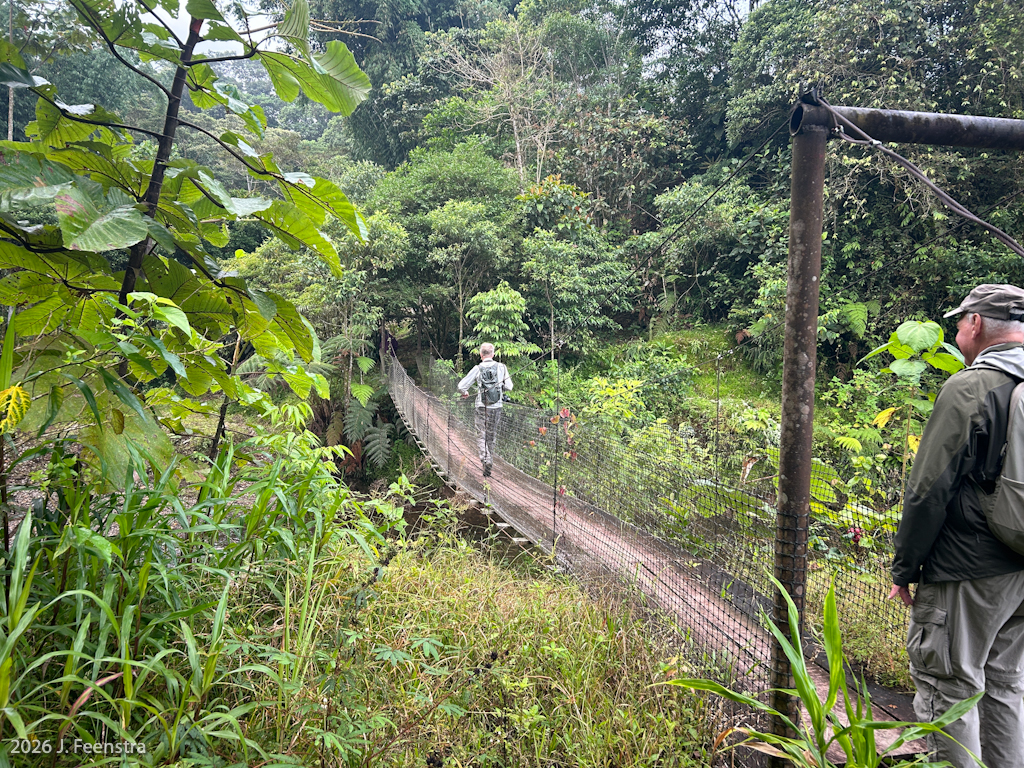
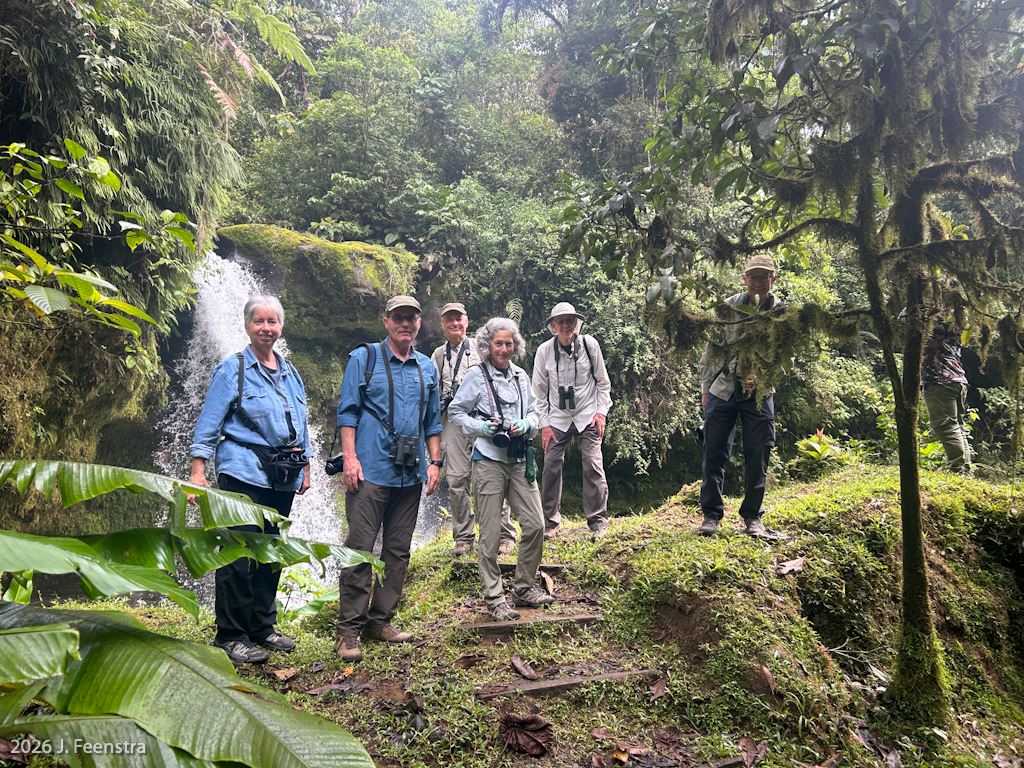


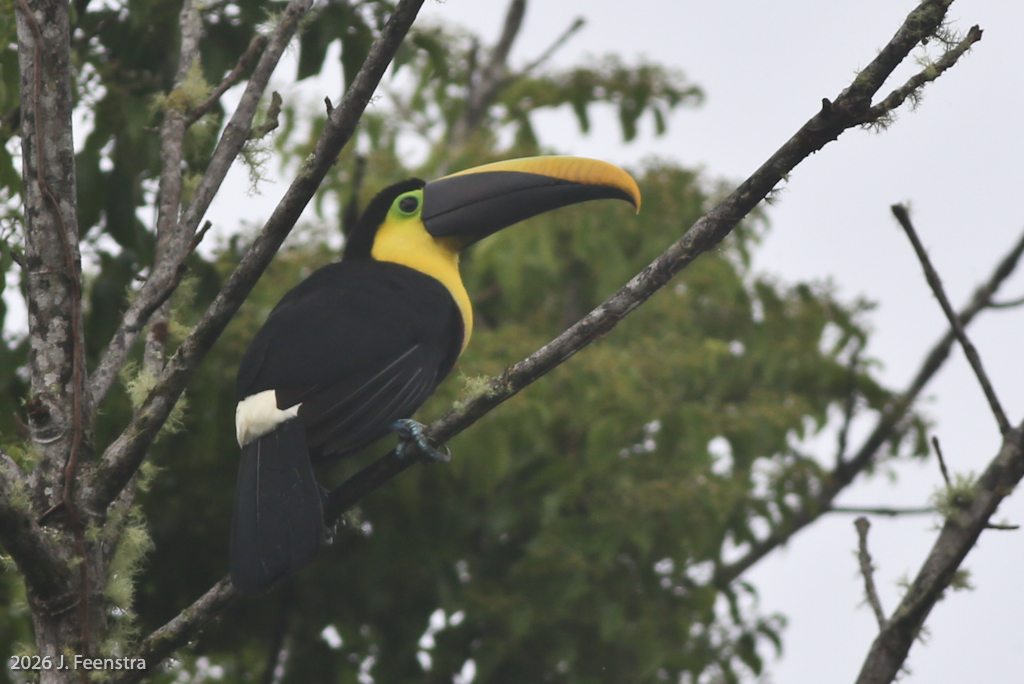

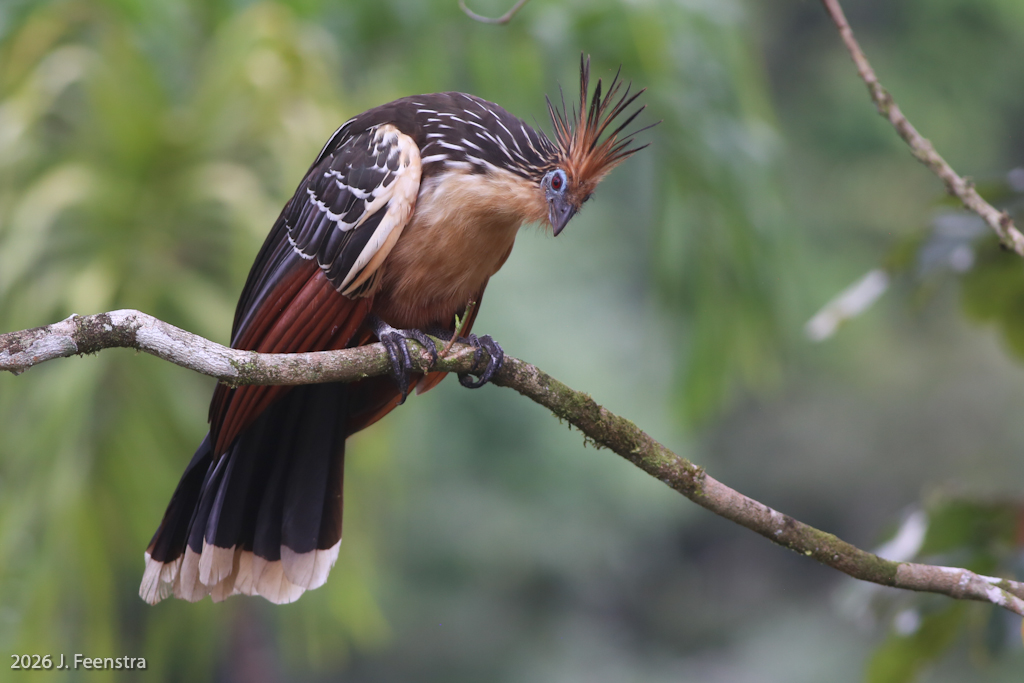
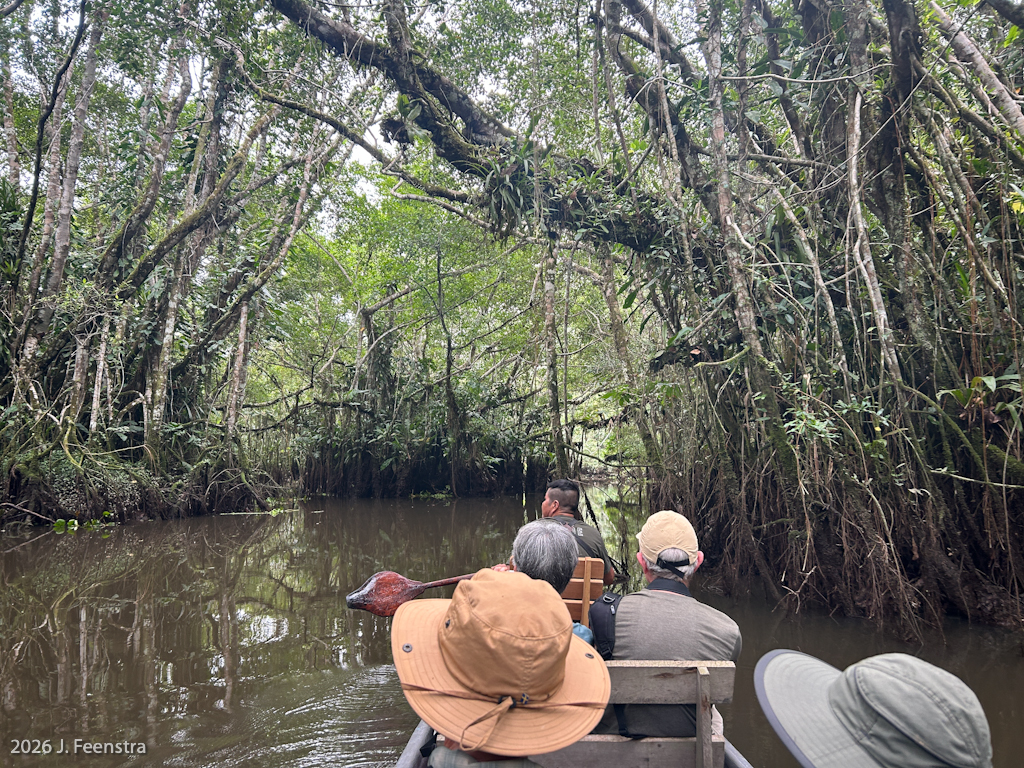
After about a week in the mountains, the tour then took a drastic turn. We left our cool mountain heights and descended out into the lowland Amazon. Getting out into the jungle is a bit of an adventure in itself. First we got a ride to the frontier city of Coca. Then, we got in a motor boat and we jammed down the Rio Napo for nearly three hours. Finally, we landed on a beach, hiked for another twenty minutes, and hopped in a paddle canoe to access a secluded oxbow lake on which Sani lodge sits. This serene place, far from any roads or cars, would be our base for the next five full days of birding. Ridiculous Hoatzins, retina-scorching Masked Crimson Tanagers, and raucous Blue-and-yellow Macaws were our welcoming committee.

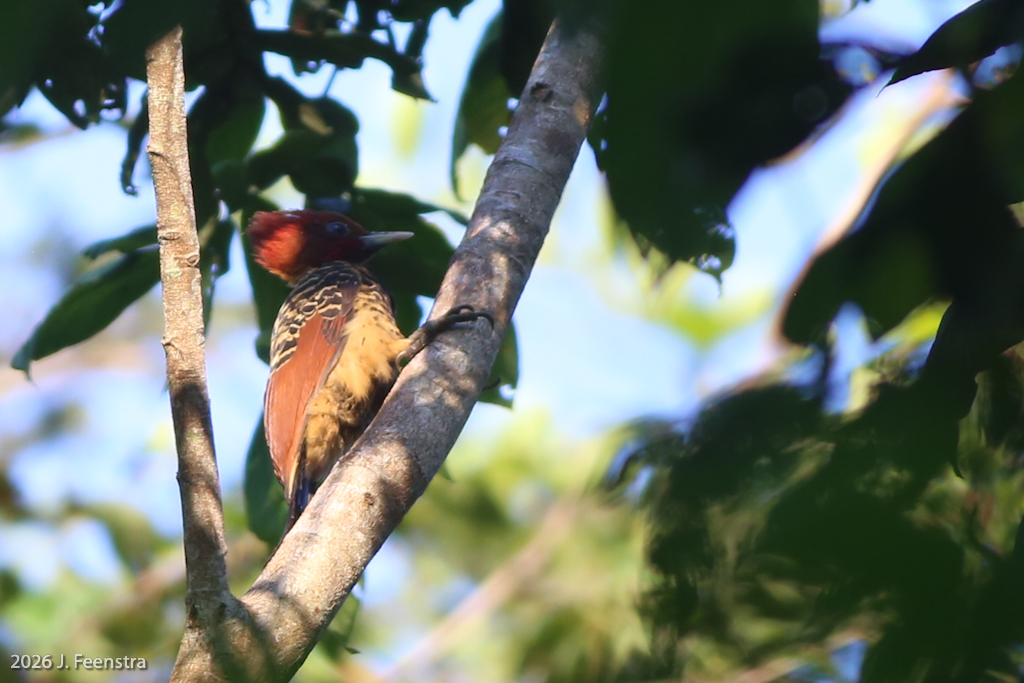
Our first full day in the lowlands began in the canopy tower. With so much life layered from the ground up, a high perch is the best way to see those things that we’d not see from the bottom. Raptors showed well with Slate-colored Hawk, Double-toothed and Plumbeous Kites, Roadside Hawk, and Great Black Hawk. Many-banded and Ivory-billed Araçaris helped make things colorful as did a Spangled Cotinga. Fly-by eye-level Blue-and-yellow Macaws and load of Mealy Parrots were good, too. Down below the tower with a little work we had scope views of Wire-tailed and Golden-headed Manakins and a Collared Puffbird. The afternoon had us back paddling around the lagoon where we caught up with some of the woodpeckers, including four members of the Celeus genus: Chestnut, Waved, Cream-colored, and Rufous-headed. A male Fasciated Antshrike that poked around in the vines over our heads was also pretty cool. And, a fight between two Spix’s Guans pretty much right over our heads had us a little nervous that we might get involuntarily involved. As the sun set we coasted back into the dock ready for dinner.


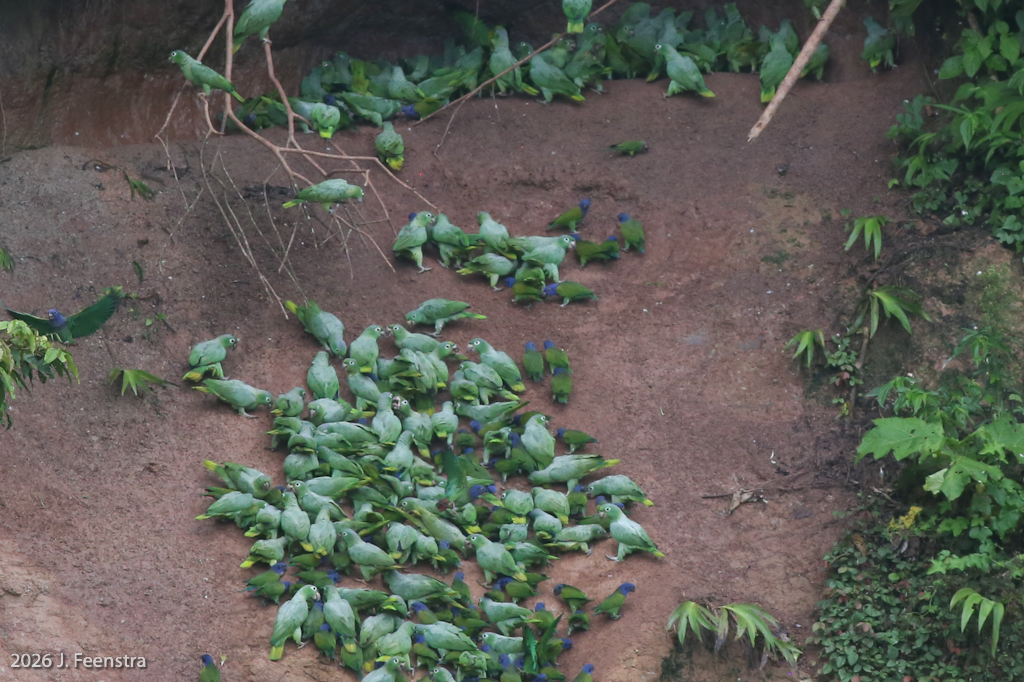

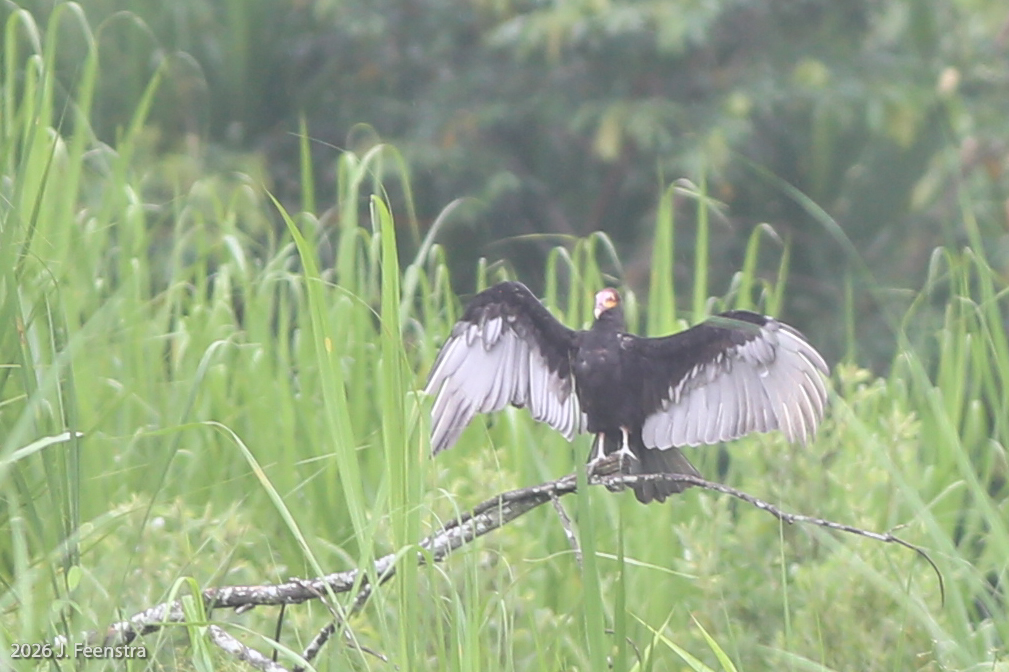
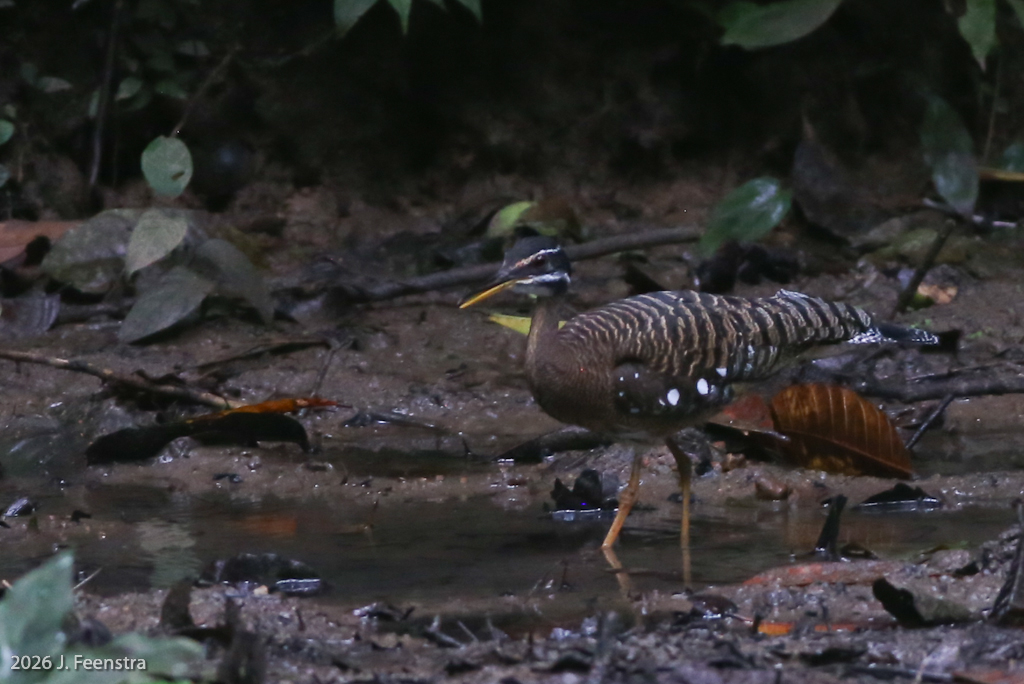
While out in the Amazon, we also spent a morning visiting parrot clay licks, a fascinating piece of tropical biology. Various species of parrots come together at mineral deposits and basically eat the dirt in order to neutralize the toxins in the seeds they eat. We visited two sites. One was on the bank of the Rio Napo and had gangs of screeching Blue-headed Parrots, Mealy Parrots, Yellow-crowned Parrots, and some Dusky-headed Parakeets. There was also an Orange-breasted Falcon perched up on a snag above the scene closely monitoring for a misstep and perhaps a meal. The second site we visited was inside the forest and hosted gangs of screeching Cobalt-winged Parakeets and Orange-cheeked Parrots. A few Scarlet Macaws were also there to show the lesser parrots how true screeching is really done. When the parrots were quiet, a Sunbittern came stalking out of the forest and poked around through the mud. Rain dampened some of our afternoon plans, but we sheltered for lunch then made the most of the post-rain activity. On the riverbank we saw a couple of Lesser Yellow-headed Vultures, a bird that has recently colonized the open habitat of the Rio Napo, plus a trio of Collared Plovers. Once back in the canoe passing through our lodge lagoon we saw a duo of Cocha Antshrikes, a local specialty known from only a few locations along the Rio Napo.

Though we’d been birding the Amazon for a couple of days, the next day was our first real dedicated foray into the dark interior forest. We spent a morning in the primary rainforest adjacent to the lodge, walking about 2km into the jungle. Birding is tough in there with most animal species being both shy and cryptically colored, all in a dark forest. Dusky-throated Antshrike and Cinerous Mourner were great, but basically just gray birds. The Cinnamon-throated Woodcreeper and Spot-backed Antbird were pretty snazzy, however, and the Cream-colored Woodpeckers bordered on the absurd. And, even if the birds can be a little plain, there are some pretty loud ones like the truly ear-splitting Screaming Piha. We finished the day with an evening canoe ride through the flooded forest. The forest at night from the water is magical. We got to see Agami Herons up in the trees and a Boat-billed Heron stalking a shoreline. We even found a minute American Pygmy Kingfisher asleep on a branch right next to our passing canoe. Once we cleared the forest and made open water on approach to the lodge the clear night sky was lit up with stars.

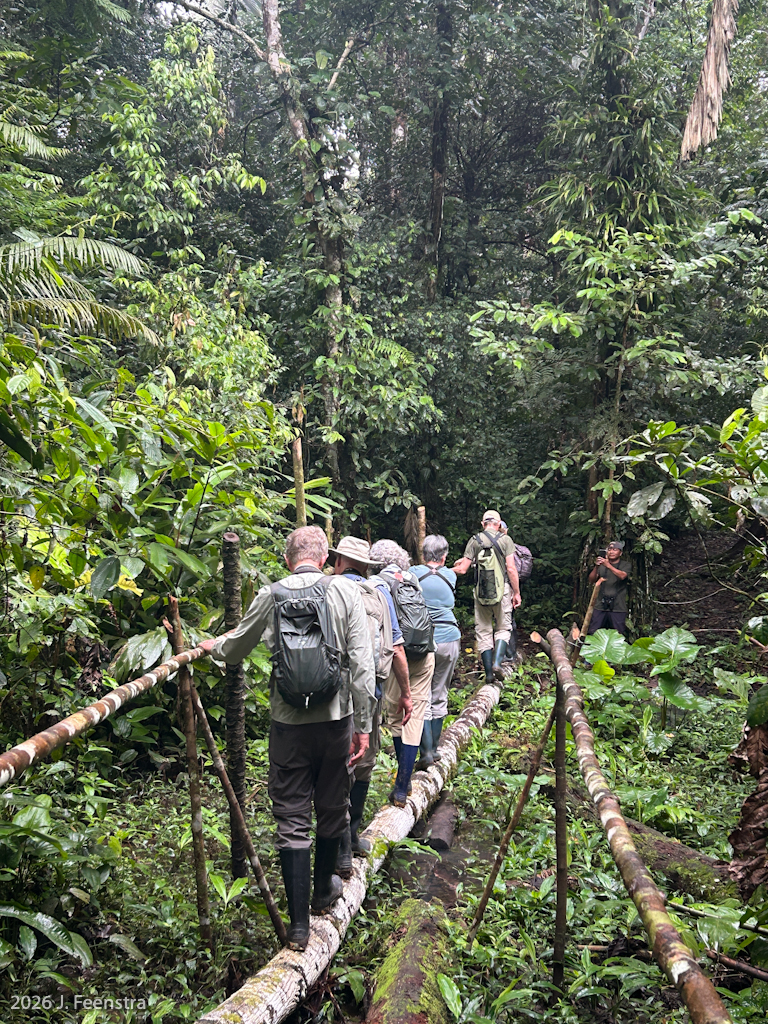
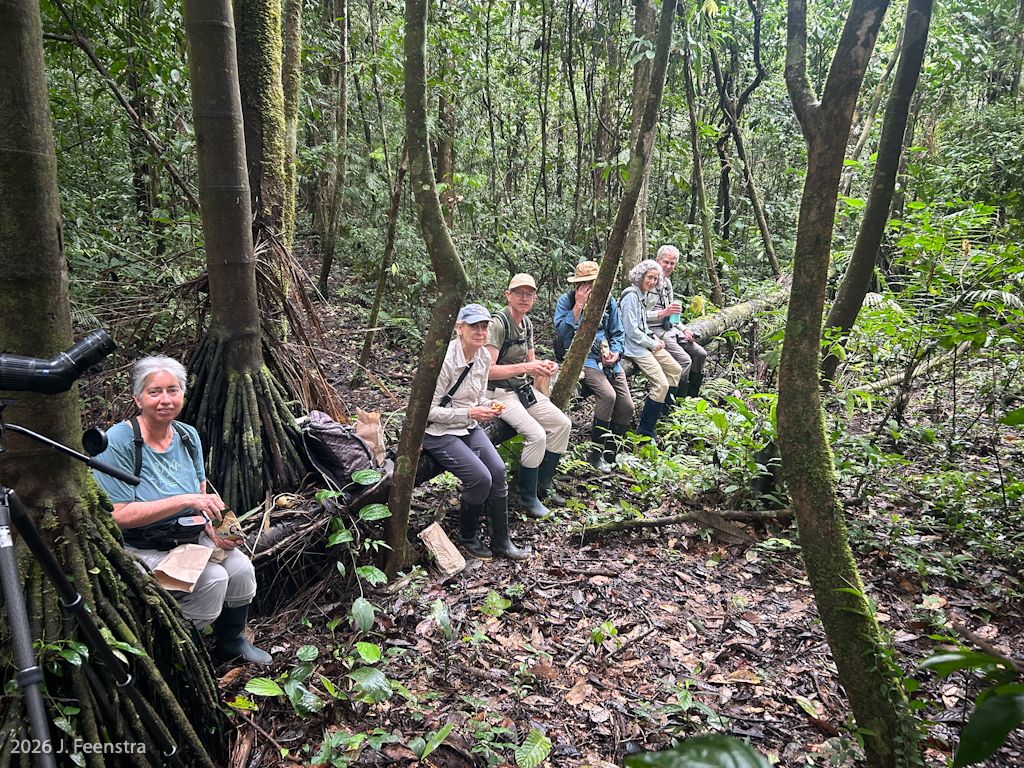
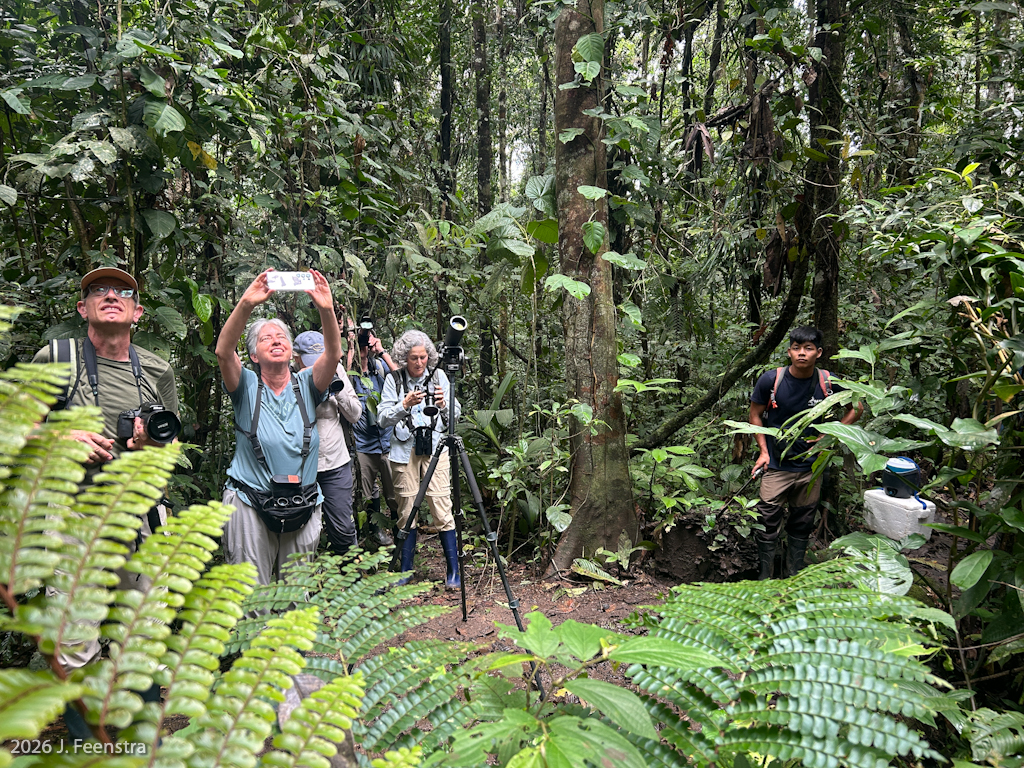
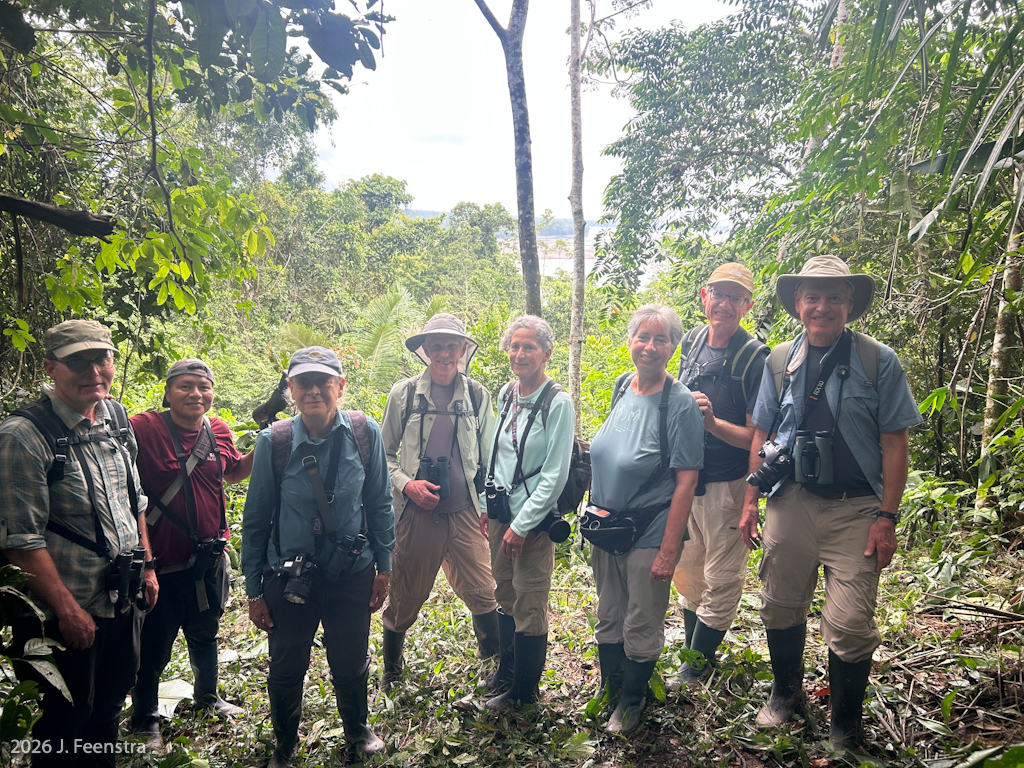

The next day we returned to the interior forest, but this time to the hilly terra firme forest of Yasuni National Park on the south shore of the Rio Napo. Hilly indeed after our mostly flat walking and canoe paddling around, but the birds were spectacular. We had the privilege of seeing a Lined Forest-Falcon on a branch close by. It seemed to have just teleported in. We also found a Yellow-billed Jacamar, another specialty of the hilly forest. We then caught a motor boat across the river for lunch at the Sani Kichwa community center and, as we were leaving, we saw three endangered Amazon River dolphin not 50m from our canoe dock. The remainder of the afternoon we caught up with some striking Pied Plovers and a sleek Castlenau’s Antshrike, a specialty of the river islands. It was a long day, but a good one.
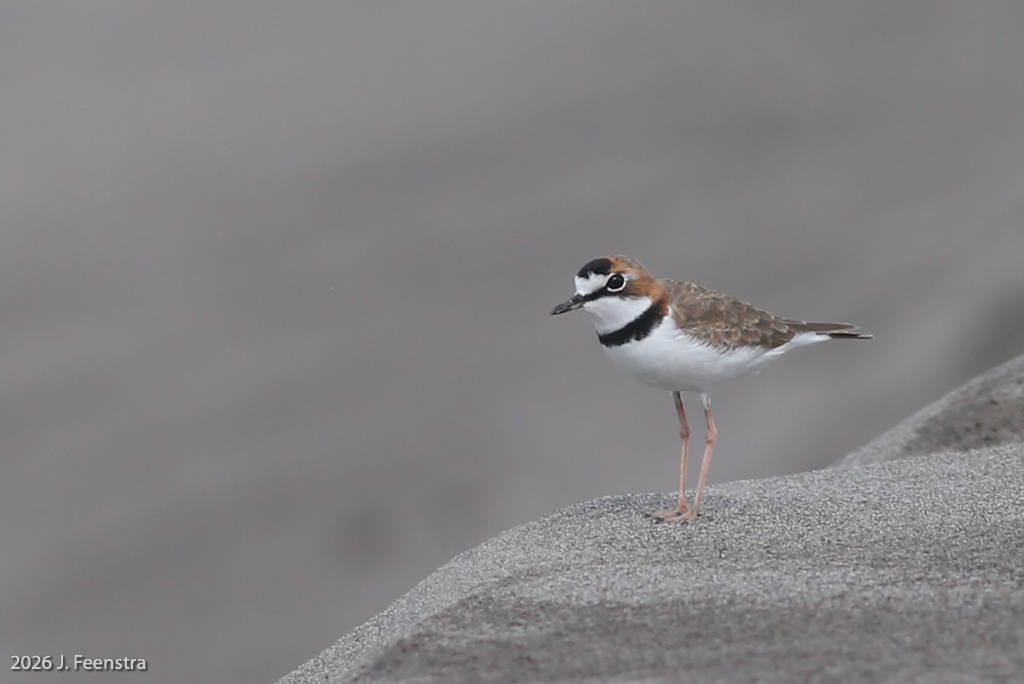
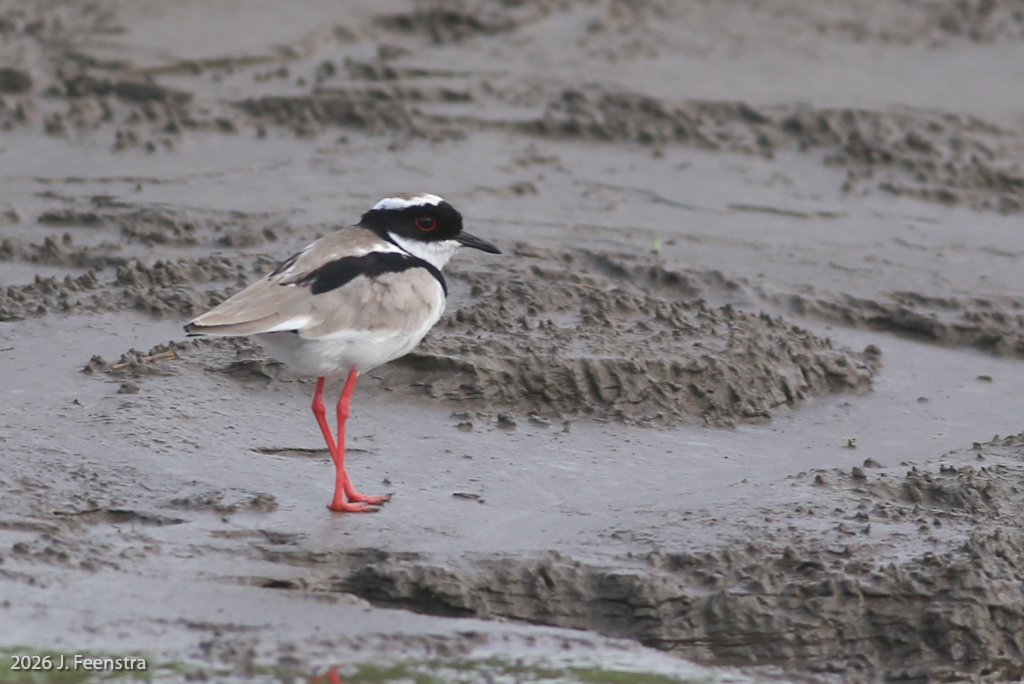


With the end of the tour approaching, we spent our final full day of Amazon birding doing a redux of our first day: a start in the tower and an afternoon lagoon canoe ride. The tower brought us a few newies like White-necked Puffbird, Black-bellied Thorntail, and Yellow-bellied Dacnis, while in the forest below we connected with a Gray Antwren and in the channel on the way to the lagoon we finally saw the White-chinned Jacamars that had been calling to us for the past few days. We had lunch at the lodge, which was fortuitous, given that a serious storm broke right as we sat down to eat and then lasted for the next several hours. The final afternoon canoe paddle was cool and peaceful after the rain and we found a pair of Pygmy Antwrens, a Tropical Gnatcatcher, and a minute Reddish Hermit. So, it closed with some very small birds in the big jungle.
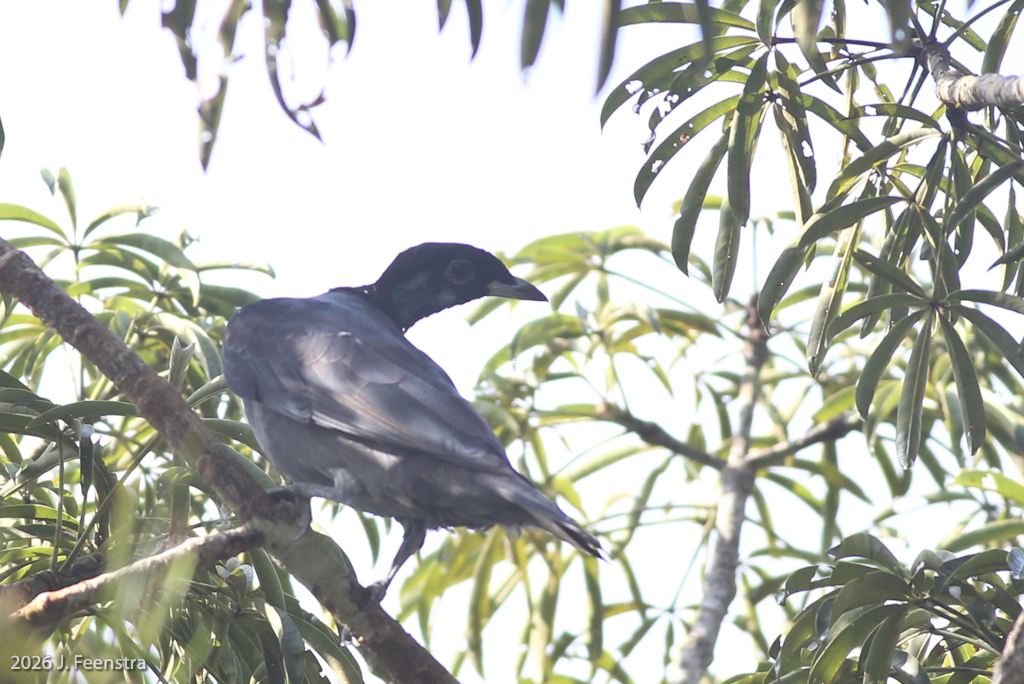
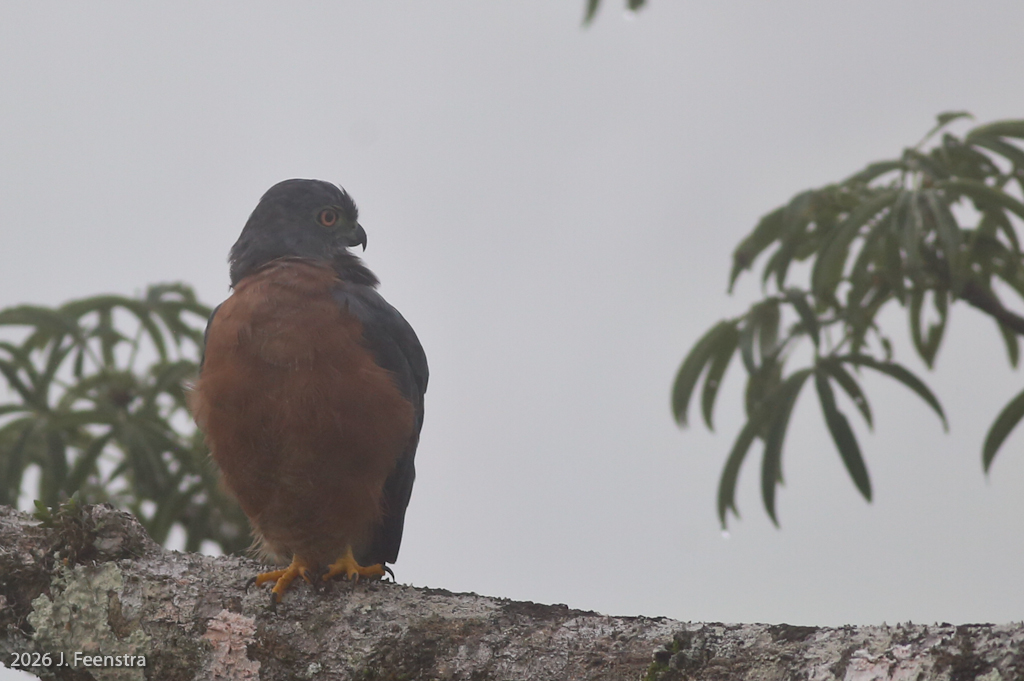
Leaving the Amazon also meant the end to the tour, this great descent from the lofty heights of the Andes to out past their toes. We left in the dark, took our first canoe, then our motor boat, (pause for the two Whistling Herons at Coca airport) then an airplane, and we were back where we started in the cool dryness of Puembo. We closed it out over an Andean dinner concluding two fun and adventurous weeks in the forest.